Inchagoill Island The first Early Christian site I ever visited was here on Inchagoill Island, Lough Corrib, Co Galway. It was an unforgetable experience, this is really where I first caught the bug. You can sail to the island from Ashford Castle in Cong, County Mayo or from Oughterard in County Galway, either way the trip to the island is a visual delight. The atmosphere on the island was incredible, a simply wonderful adventure. On the island are the ruins of two churches, Templepatrick-Teampall Phádraig a 10th/11th century oratory and Templenaneeve-Teampall Na Naomh a 12th century Romanesque church, an early Christian graveyard, a number of cross pillars and cross slabs, a possible 6th century cross pillar, known as 'The Stone of Luguaedon' believed to mark the burial place of St Patrick's nephew, several bullaun stones, a holy well and a 12th century mausoleam. It has been suggested the name Inchagoill derived from 'Inis an Ghaill Chraibhthigh' meaning the Island of the devout foreigner. Templepatrick / Teampall Phádraig As well as establishing monasteries on the coastal islands many of Ireland's early monks, looking to live a life of solitude and prayer retreated to the secluded islands on many of Irelands lakes/loughs, Inishcealtra, White Island, Innisfallen, Church Island and Devenish Island are a few notable examples. The first church on Inchagoill may have been established in the early 6th century, see the Luguaedon stone below, it was probably built from timber as stone churches were not constructed in Ireland during this period. The inscription on the Luguaedon stone and the dedication of the stone church to Ireland's patron saint point to a strong connection to St Patrick.
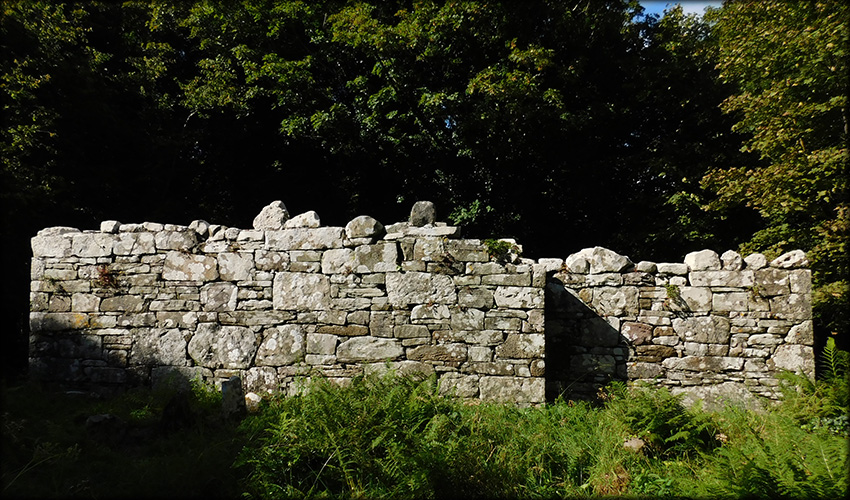
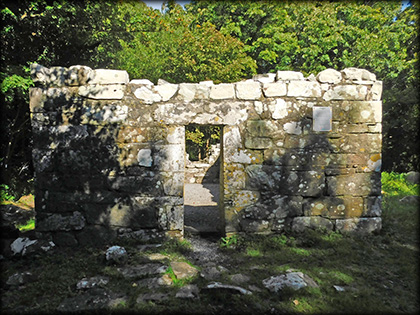
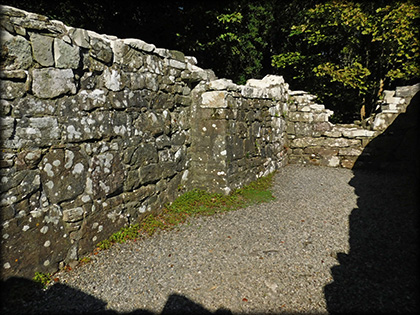
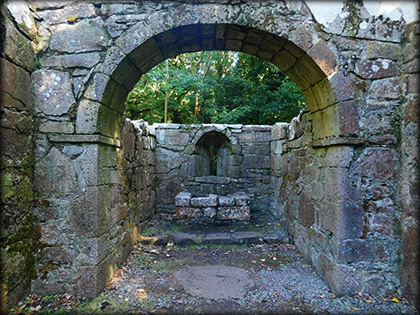
The nave of Templepatrick was probably built in the 10th/11th century to replace the timber church, the chancel may have been added a short time later. The style of construction is similar to most of the pre-norman churches we have visited. It has a trabeate doorway in the west wall with slightly inclined jambs. Oddly, I personally think the stones used in the 12th century church appear to be more of a cyclopean nature than those used here at Templepatrick. The church stands in the NE corner of a rectangular graveyard. |
|
West wall and doorway |
Interior, nave and chancel |
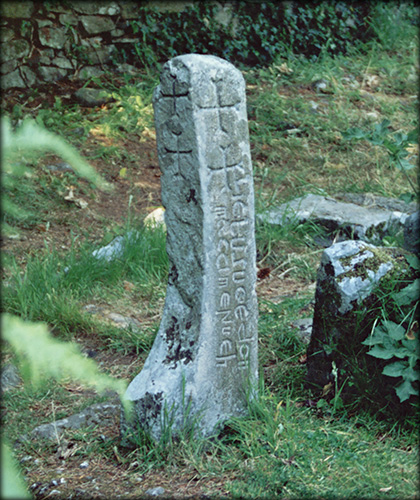
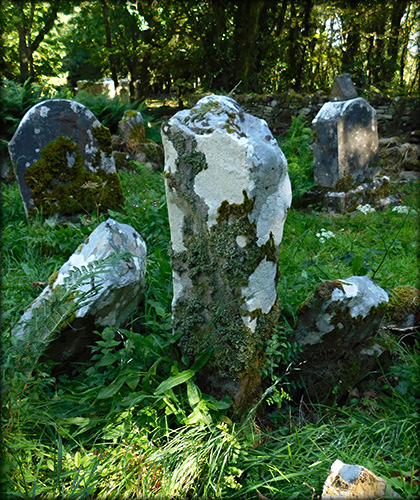
Cross-inscribed pillar / Stone of Luguaedon Standing in the graveyard, facing the front of Templepatrick, is a memorial stone shaped like a rudder. It bears the inscription, "Lie Luguaedon macci Menueh" (Stone of Luguaedon son of Menueh). This is the oldest inscription in Ireland written in Roman letters. It is said to mark the burial place of St Patricks nephew Lugnad, who was also his navigator. This dates back to around 500 CE and may be a transliteration of an earlier ogham inscription. For more details Click here A 75 metre long trackway takes you south-east to the 12th century church. |
|
Stone of Luguaedon |
Graveyard |
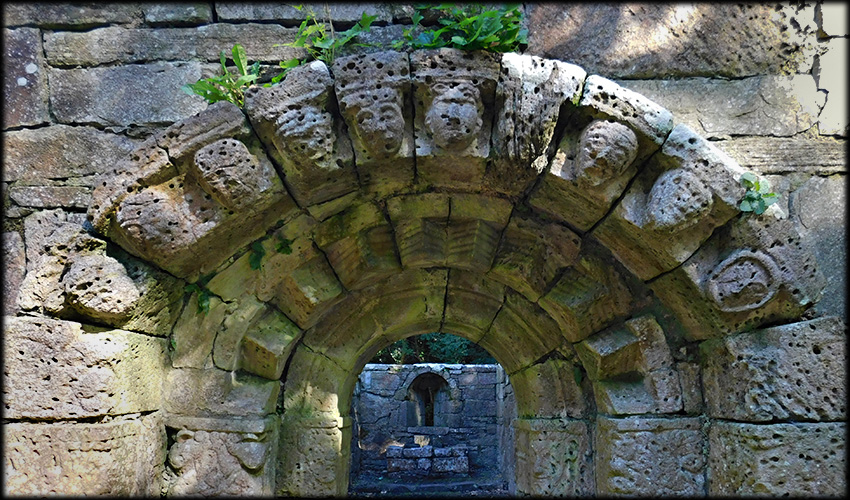
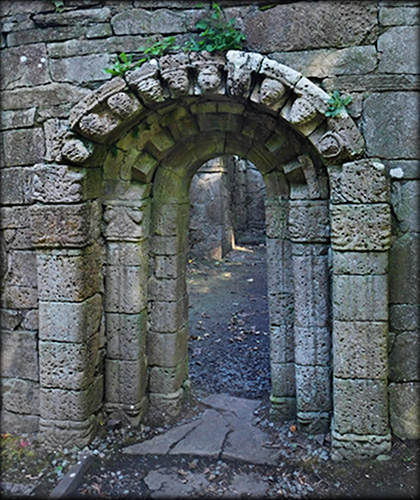
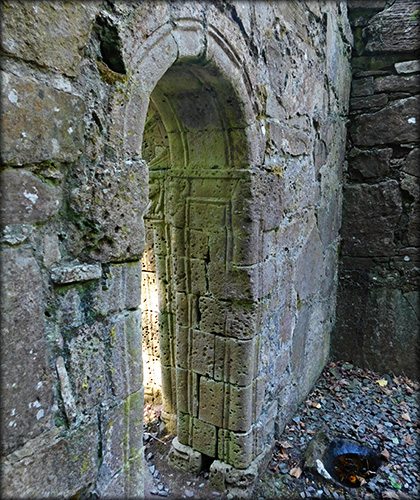
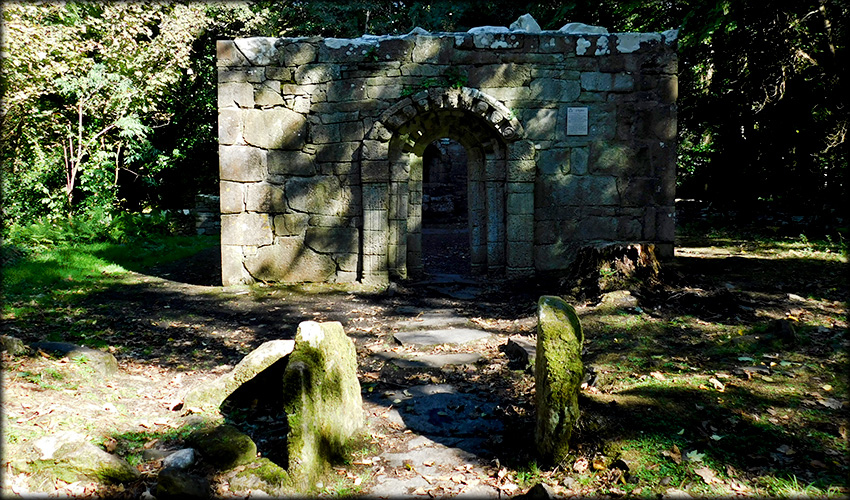
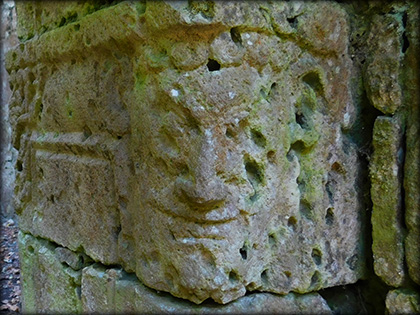
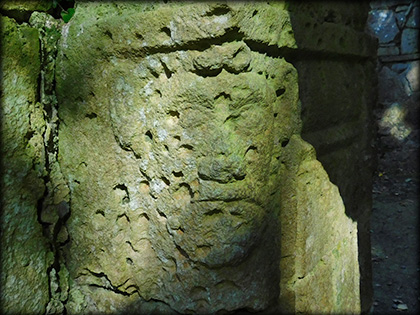
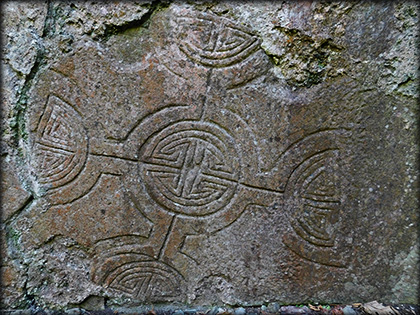
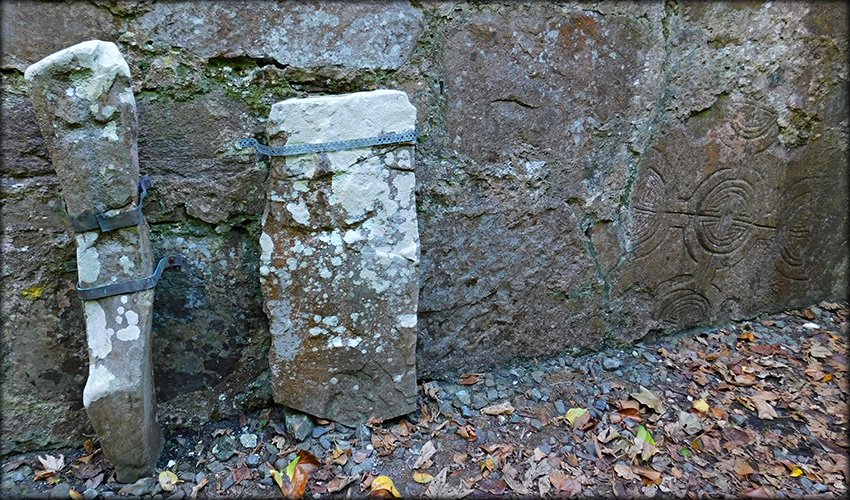
Templenaneeve / Teampall Na Naomh It is believed Teampall na Naomh - Church of the Saint, the 12th century Romanesque church, is dedicated to the founder of the first church on the island. It is a nave and chancel church with a plain chancel arch and a stunning romanesque doorway of two orders, with sturdy columns and carved capitals. The inner order contains chevron mouldings in the arch. The outer arch bears ten carved heads, the capitals also bear head carvings, see images below, unfortuneately the sandstone used features skolithos. There several cross pillars in the nave and an elaborate, Clonmacnoise style, cross slab is built into the south wall of the nave, Fahey mentions a similar cross at High Island off the coast of Galway.
Carved heads in the arch of the romanesque doorway |
|
Exterior |
Interior |
West wall and doorway |
|
Capital with carved head |
Capital with another carved head |
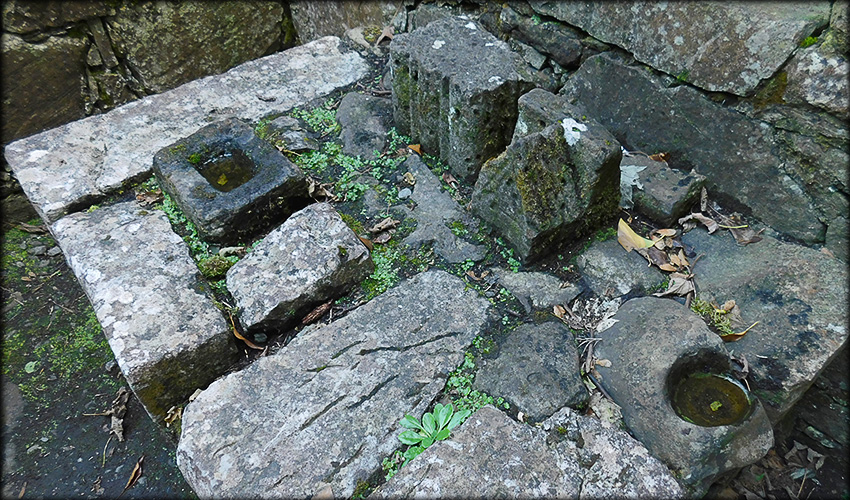
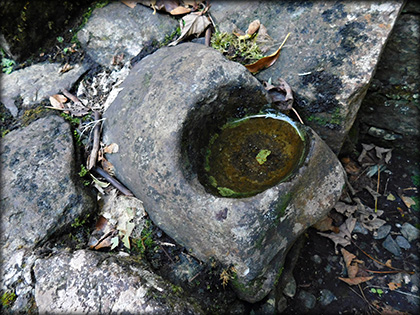
In the chancel on the top of the stone altar are some architectural fragments, probably from the west doorway, and a bullaun stone, there is another bulluan stone embedded in the floor of the nave next the doorway. Also on top of the altar is a rectangular stone with what looks like a socket. There are trips daily to the island throughout the summer months, strongly recommended. |
|
Cross slab |
Chancel arch |
Cross pillar, left and the two cross slabs in the nave |
|
Altar bullaun |
Nave bullaun |
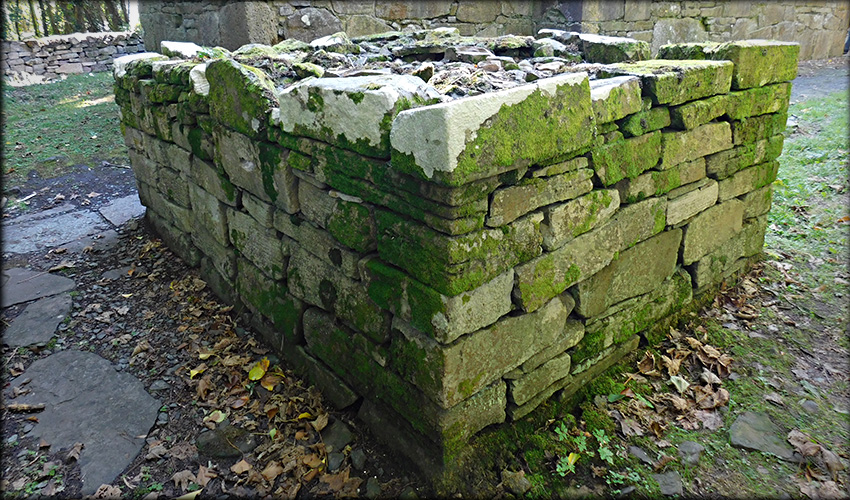
Mausoleum This tomb is situated at the north-east angle of Templenaneeve. In the article referenced below it is said to be the tomb of Muircheas O'Nioc, the successor of St Jarlaith of Tuam. Bishop O'Nioc had retired to Inchagoill before he died in 1128. It is often described as the Archbishops tomb, but Tuam was not established as an Archdiocese until 1152 when Áed Ua h-Oissín, became the first Archbishop, see inscription on the Tuam High Cross page.
|
|
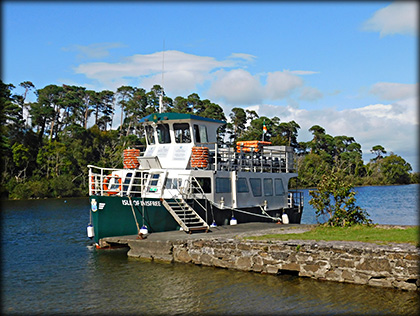
Situated: Inchagoill Island, Lough Corrib, Co Galway. There are boat trips to the Island during the summer season, from Oughterard Pier in Co Galway and also from Cong in Co Mayo. Discovery Map 45: M1263 4922. Last visit July 2026. Longitude: 9° 18' 59" W Latitude: 53° 29' 9" N Photo: Jim Dempsey and José Gutiérrez. |
 |
| Ref: Fahey, Jerome. “The Shrines of Inis-an-Ghoill, Lough Corrib.” The Journal of the Royal Society of Antiquaries of Ireland, vol. 31, no. 3, 1901, pp. 236–45. JSTOR, http://www.jstor.org/stable/25507145. | |